Kay's State Under the Influence of the Looking-Glass Shards and the Snow Queen
The Snow QueenKay's state under the influence of the looking-glass shards and the Snow Queen is a magical corruption of both perception and feeling: a splinter in his eye makes goodness appear defective, while a grain in his heart hardens into ice and diminishes his capacity for love. The Snow Queen deepens the change until Kay forgets Gerda and home; only Gerda's tears and the hymn they shared undo it. His recovery restores not just his affection but the clear perception and freedom the shards had taken from him.
The Shards and the First Change
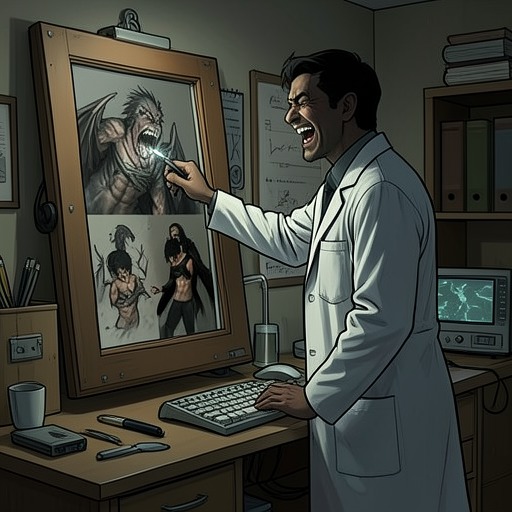
The corruption begins on a summer day, at noon, while Kay and Gerda are looking at a picture book of animals and birds. Kay feels something strike his heart and soon complains of something in his eye. Gerda looks closely but sees nothing; Kay decides the sensation has passed. It has not. A fragment from the Demon’s Magic Mirror remains in his eye, and a small grain has lodged in his heart. The grain quickly becomes a lump of ice. The invisible injury is therefore both perceptual and emotional: Kay does not merely see differently, but becomes less able to feel the harm his new judgments cause.
The change announces itself when Kay examines the roses. Instead of seeing the beauty Gerda loves, he singles out supposed defects, calling one worm-eaten and another crooked, and condemns the flowers along with their boxes. He kicks the boxes and tears off the roses. When Gerda cries out, his response is not remorse: seeing her fright, he pulls off another rose and jumps through his own window, leaving her behind. The sequence turns the shared roses from signs of affection into targets for his contempt, making the damage to their relationship visible in a concrete act.
Distorted Perception and Conduct
Kay’s altered judgments spread beyond the roses. He dismisses the picture book as fit only for babies and interrupts Grandmother’s stories with objections. He also puts on spectacles and imitates Grandmother from behind her chair, then mimics the speech and gait of people in the street, concentrating on what is peculiar or disagreeable in them. Onlookers mistake this cruelty for remarkable cleverness and talent. The story identifies the shard in his eye and the coldness in his heart as the cause, contrasting the praise he receives with the injury that produces his behavior. Kay teases Gerda despite her wholehearted love for him, and his games cease to be childlike.
One winter day, he uses a burning glass to magnify snowflakes on the tail of his blue coat. Each flake appears to him as a perfect flower or glittering star, more interesting than real flowers because, in his judgment, it has no fault until it melts. The episode repeats the earlier contrast between roses and perceived defects, but reverses its object: Kay now admires an icy perfection detached from living warmth. Soon afterward, wearing thick gloves and carrying his sledge, he tells Gerda that he is going to the great square to join the other boys. His ordinary departure becomes the point at which the Snow Queen takes him away from the life and relationships he has begun to reject.
The Snow Queen’s Hold
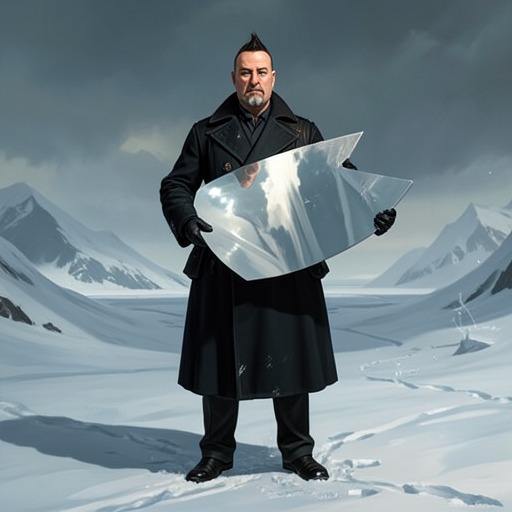
When the Snow Queen reveals herself as the driver of the great sledge, she invites Kay into her warm fur and kisses him on the forehead. Her kiss is colder than ice and passes through to his heart, already nearly frozen. For a moment he feels as if he will die; then he seems well again and no longer notices the cold around him. His first concern is his sledge, which is fastened to a white bird flying behind the queen’s vehicle. After she kisses him again, he has forgotten Gerda, Grandmother, and everyone at home. The queen tells him there must be no more kisses, or she would kiss him to death. Her power combines bodily cold, temporary comfort, and the removal of memory: Kay’s estrangement is no longer only a consequence of the shard’s distorted judgments but a captivity sustained by the Snow Queen.
The Finland woman later explains the condition holding Kay there. He is with the Snow Queen and finds everything there so pleasing that he believes it is the finest place in the world; the shard in his eye and the piece of glass in his heart must be removed for him to become human again and for the queen to lose her power over him. This account clarifies why Kay cannot free himself through his own cleverness or judgment. The very standards by which he evaluates his surroundings are corrupted, and his heart’s coldness prevents him from recognizing what he has lost.
The Palace and the Failed Puzzle
In the Palace of the Snow Queen, Kay is nearly black with cold, yet he does not feel it: the queen has kissed away his shivering, and his heart is already ice. He moves sharp, flat pieces of ice across the floor and arranges them into figures, treating the activity as a game of reason. His fingers are artistic, and the figures seem to him extraordinarily important, an estimation the story again connects to the fragment in his eye. The palace’s frozen lake, which the Snow Queen calls the Mirror of Reason, gives this pursuit its setting: Kay is absorbed in a supposedly perfect, cold order while cut off from human warmth.
Kay can compose many complete figures and words, but he cannot form Eternity, the word he wants most to discover. The Snow Queen has promised that once he finds it he will be his own master, receive the whole world, and get a new pair of skates. Even that tempting reward cannot repair his vision or release him from the state that keeps him fixated on the ice. When the queen leaves for warmer countries, Kay remains alone in the vast hall, still and absorbed among his pieces. His failure to complete the word makes his captivity legible as a task he cannot finish while the shards remain in place.
Recognition and Restoration
Gerda reaches the great hall after offering a prayer that stills the cutting winds. She recognizes Kay at once, runs to him, and embraces him, but he remains stiff and cold. Her tears fall on his breast, penetrate his heart, thaw its lump of ice, and wash away the piece of glass lodged there. She then sings the childhood hymn about roses blooming and the children seeing the Christ-child. The familiar words connect the frozen palace to the shared world of roses, faith, and childhood that Kay had forgotten.
Kay bursts into tears, and the shard swims out of his eye. He recognizes Gerda, asks where she has been and where he has been, and sees the hall as cold, large, and empty. His perception has changed along with his feelings: what had seemed to him the finest place is now desolate. He clings to Gerda as she laughs and weeps with joy. The pieces of ice dance, and when the children lie down they form the letters of Eternity, completing the puzzle Kay could not solve alone. The promised freedom is thus achieved only after the fragments have been removed and Kay has recovered his bond with Gerda.
Gerda’s kisses restore Kay’s cheeks, eyes, hands, and feet; he becomes healthy and cheerful. The Snow Queen may return, but Kay’s freedom is already secured in the shining letters. As they leave the palace hand in hand, Kay and Gerda speak of Grandmother and the roses on the roof. The winds rest and the sun comes out. The return of those remembered subjects marks the end of the estrangement: Kay can again share affection, memory, and the ordinary world with Gerda.